Principal Office Located at 1424 Gables Court, Plano, TX 75075
Call Today For a Free Case Evaluation


What to Do When Social Security Denies Your Disability Claim
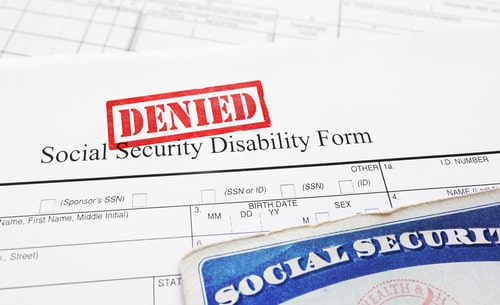 Getting denied for Social Security disability benefits is discouraging, especially when you are already dealing with a serious health condition and financial stress. But a denial is not the end of the road. Most initial disability claims are denied, and many people who appeal those decisions ultimately get the benefits they deserve. If your disability claim was denied in 2026, the Collin County Social Security disability lawyers at The Law Offices of Coats & Todd can help you fight back and pursue the benefits you are entitled to.
Why Do So Many Social Security Disability Claims Get Denied?
The Social Security Administration denies a large percentage of initial applications every year. Common reasons include:
- Not enough medical evidence to support the claimed disability
- A finding that the condition does not meet the SSA's definition of disability
- A determination that you can still do some type of work even if you cannot do your old job
- Incomplete or incorrect information on the application
- Failure to follow prescribed treatment without a valid reason
Your denial letter will explain why your claim was rejected. Reading it carefully is the first step toward building a successful appeal.
What Is the SSA's Definition of Disability?
The Social Security Administration uses a strict definition of disability. Under the Social Security Act, 42 U.S.C. Section 423(d)(1)(A), disability means the inability to do any substantial gainful activity due to a physical or mental impairment that has lasted or is expected to last at least 12 months or result in death.
This is a high bar. The SSA does not just look at whether you can do your old job. They look at whether you can do any job that exists in significant numbers in the national economy, taking into account your age, education, and work experience. Understanding this standard shapes everything about how your appeal needs to be presented.
What Are the Steps in the Social Security Disability Appeals Process?
The appeals process has four levels. Most people who ultimately win their cases do so at the hearing level or beyond.
Step One: Reconsideration
The first level of appeal is reconsideration. You are asking the SSA to take another look at your claim. A different examiner reviews your file and considers any new evidence you submit. Reconsideration denials are also very common, but it is a required step before you can move to a hearing in most states. You generally have 60 days from your denial notice to request reconsideration.
Step Two: Hearing Before an Administrative Law Judge
If reconsideration is denied, you can request a hearing before an Administrative Law Judge, also called an ALJ. This is where many successful appeals are won. The ALJ hearing is a formal proceeding where you can present evidence, call witnesses, and have an attorney argue on your behalf. The ALJ reviews your complete file and makes an independent decision. You generally have 60 days from the reconsideration denial to request a hearing.
Step Three: Appeals Council Review
If the ALJ denies your claim, you can ask the Social Security Appeals Council to review the decision. The Appeals Council can affirm the decision, send the case back to the ALJ, or issue its own decision. It does not review every case and may decline yours if it does not find a reason to do so.
Step Four: Federal Court
If the Appeals Council denies your case or declines to review it, you can file a lawsuit in federal district court. A federal judge reviews whether the SSA's decision was legally sound. This is the most complex level and requires experienced legal representation.
What Evidence Is Most Important in a Social Security Disability Appeal?
Strong medical evidence is the foundation of any successful appeal. The SSA needs to see detailed documentation of your condition, how it limits your ability to function, and why it prevents you from working.
Important evidence includes treating physician records. Those records should show your diagnosis, your treatment history, and the specific limitations your condition causes. Results of diagnostic tests like MRIs or lab work are also important. If your disability involves a psychological condition, mental health records will be needed as well. Statements from your doctors explaining how your condition affects your ability to work can carry a lot of weight. And your own written description of how your condition impacts your daily life is something the SSA will also consider.
Schedule a Free Consultation With Our Plano, TX SSDI Attorneys
At The Law Offices of Coats & Todd, our Collin County Social Security disability lawyers bring over 60 years of collective legal experience to every case we handle. Our attorneys have earned numerous awards and hold active leadership positions in organizations including the National Association of Social Security Claimants Representatives and the Dallas Association of Social Security Claimants Attorneys. That level of involvement means we stay current on every development in disability law and bring that knowledge to every client we represent.
Contact us at 972-671-9922 to schedule a free consultation today.

Call Today For a Free Case Evaluation
 972-671-9922
NO FEES UNLESS YOU WIN


From our principal office in Plano, Texas, we serve clients throughout Dallas County, Denton County, Collin County, Tarrant County, and the rest of North Texas, including but not limited to Dallas, Fort Worth, Garland, Frisco, McKinney, Plano, Arlington, Irving, Denton, Carrollton, Addison, Coppell, Euless, Colleyville, Grand Prairie, Allen, Anna, Murphy, Fairview, Prosper, Lewisville, Little Elm, The Colony, Flower Mound, Duncanville, Keller, Roanoke, N.Richland Hills, Mansfield, Burleson, Benbrook, Highland Village, Argyle, Celina, Rockwall, Kaufman, Terrell, DeSoto, Tyler, Nacogdoches, Sulphur Springs, and Greenville.